


Hi This Is Bry named UK top 10 for Best Business Branding at the Small Business Awards
Hi, I’m Bry, founder of Hi This Is Bry. I’m a multi award winning Creative Strategist and Brand Consultant helping people build award worthy brands and make them visible. I write about branding, marketing, visibility and consumer behaviour, breaking down why recognisable brands succeed, why people buy and what you can apply to what you’re building.
Being named in the UK top 100 for Best Creative Arts Business was already more than I expected. Then I found out I'd also been named in the UK top 10 for Best Business Branding at the Small Business Awards. Top ten. In the whole country. I had to go for a little walk after I read that one.
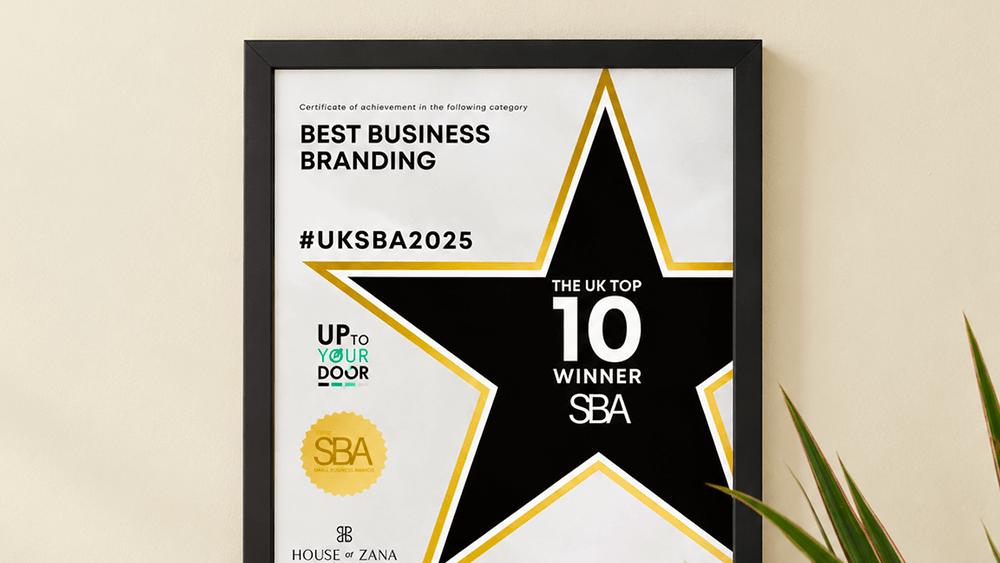
Being named in the UK top 100 for Best Creative Arts Business was already more than I expected, then I found out Hi This Is Bry had also been named UK top 10 for Best Business Branding at the Small Business Awards. Top ten in the country was the bit that made me put my phone down for a minute and go for a walk, because apparently that was the only sensible response my brain could come up with.
The two recognitions felt connected but different, because the creative business category reflected the wider work behind Hi This Is Bry, while this one focused much more directly on the brand itself. That made it especially personal, because so much of the way Hi This Is Bry looks and sounds came from decisions I made after years of feeling like I was supposed to present myself very differently.
See also: Hi This Is Bry named top 100 Best Creative Arts Business in the UK
Why does my own brand look the way it does?
Hi This Is Bry is unapologetically pink, sparkly and feminine, which would probably have surprised an earlier version of me who spent quite a lot of time trying to make herself look more like what she thought a serious designer was supposed to look like. I had been given the impression that professional creative work needed to feel more neutral and restrained, so I tried toning everything down for a while and disliked it every single time.
The brand I eventually built took a much more obvious influence from Elle Woods, particularly the idea of somebody being underestimated because of how they present themselves, then turning out to be considerably more capable than people expected. That felt much more relevant to my own experience than pretending I naturally wanted a tasteful black and beige creative studio because apparently designers are issued one at graduation.
That influence does not mean copying the visual language of the character literally, because the identity still needed to belong to me and work as a real business. It gave me a starting point for thinking about confidence, femininity, humour and what happens when somebody decides they no longer need to tone themselves down to be taken seriously.
Those decisions now carry across the wider business, from the way the website looks to how I write, structure services and show up on social media. Somebody should be able to move between those places and still recognise the same person, because consistency becomes much easier when the brand is based on something real rather than a personality created specifically for marketing.
See also: How to know if your brand is holding your business back
Why does consistency matter beyond the logo?
A brand becomes much easier to recognise when somebody keeps encountering the same visual language and personality in different places. That does not mean repeating exactly the same graphic everywhere, because a brand needs enough flexibility to work on a website, social media, documents and anything else the business creates without looking like one Canva template has escaped and taken over.
For Hi This Is Bry, consistency comes more from recognisable choices. The colours, illustration style, typography and way I write all belong to the same business, so a proposal does not suddenly sound like it came from a completely different company compared with the person somebody has been following on Instagram.
That is something I also think about when creating brands for clients, because a logo is only one small part of what they will eventually need. My Foundation Brand Identity is designed for businesses that already understand what they sell and who they are selling it to, while my Strategic Brand Identity goes further into the positioning, audience and messaging before the visual identity is developed.
The aim in either case is to give the business something it can actually use, rather than producing an attractive logo and leaving the owner to invent everything around it afterwards.
Why is all of my branding work human made?
Every illustration, graphic and piece of brand collateral for Hi This Is Bry is created by me, and I take the same approach to the creative work I produce for clients. That is a deliberate decision because I want the visual identity to come from the specific business I am working on rather than starting with a generated output and trying to make a story fit around it afterwards.
Human made work also gives me much more control over the details that make something distinctive. I can develop an illustration style, redraw an asset until it behaves properly with the rest of the identity and build a visual system around choices that have an actual reason behind them, rather than accepting whatever a generator happened to produce from a prompt.
That matters even more when the business wants an identity it can use for years, because recognisable branding needs enough specificity to belong to one company. If the finished result looks like it could have been generated for any business in the same industry, there is much less for people to remember.
See also: AI logo risks every business should know
What strategy sits underneath the Hi This Is Bry brand?
The visual identity gets noticed first because pink and sparkles are not particularly subtle, but there is a lot more thinking underneath it than choosing colours I happen to like. I have had to work out who I actually want to work with, what those businesses need from me and how I can explain the difference between somebody hiring me for design and somebody hiring me to think strategically about the business behind it.
That has influenced how the services themselves are structured. A business with solid foundations that needs an expert review should not automatically be pushed into the same project as somebody who needs their entire positioning and identity rebuilt, which is why my brand strategy and marketing services now include different levels of support.
The same thinking affects pricing and messaging because I want people to understand what they are paying for before they enquire. Somebody should be able to look at the business and see that there is strategic thinking behind the creative work, while still feeling like they are dealing with an actual person rather than a large agency pretending to be friendly.
A brand like this develops over time too, because the business changes and you learn more about what customers respond to. The important part is having strong enough foundations that new services, content and opportunities still feel as though they belong to the same business instead of requiring a new personality every six months.
What goes into branding that gets noticed?
The thing I find most interesting about this recognition is that a memorable brand usually comes from decisions that happen long before somebody starts looking at logo concepts. You need enough understanding of the business to know what should be distinctive, what customers need to understand and what impression would actually be useful rather than simply unusual for the sake of it.
For my own brand, that meant being much more honest about my personality and how I wanted to work, then making sure those choices carried through the practical parts of the business. The pink visual identity would mean much less if the website sounded completely generic or the client experience felt nothing like the person somebody thought they were hiring.
That is the same thinking I bring into client work, particularly through my Strategic Brand Identity. The project looks at what makes the business worth choosing and how that can become visible through the identity, rather than starting with the assumption that the answer is simply a prettier logo.
See also: What goes into award winning branding and websites
What does this mean for the businesses I support with branding?
Winning recognition for my own branding has given me another useful perspective on the work I create for clients, because I know how much of the finished result depends on decisions that somebody looking at the logo may never see. Distinctiveness needs to survive beyond launch day, particularly once the business starts creating new content, expanding its services and becoming more visible.
When I build a brand for somebody, I am thinking about what happens once I am no longer sitting next to them telling them how to use it. The identity needs enough structure that the client can create new things without gradually turning the brand into something completely different, while still giving them enough flexibility to grow.
I am also thinking about where they want the business to go rather than only what they need this week. A new business may initially need branding for a website and social media profile, but in a year it could be entering awards, appearing in press or launching new services, so building something distinctive early gives all of that future visibility a much stronger base.
If an existing brand already has useful foundations but no longer reflects the quality of the business, my Brand Clarity Report and Refresh is designed to strengthen what is already there without assuming everything needs replacing. That can be a much more sensible option when the problem is inconsistency or outdated presentation rather than the entire identity being wrong.
Why does branding matter when people are comparing businesses?
Customers rarely encounter a logo on its own, because they are usually seeing it alongside a website, social profile, reviews and whatever else appears when they research the business. Each of those things contributes to the expectation they form before they ever speak to you, particularly when they are choosing between several businesses that appear to offer something similar.
A distinctive brand can make that process easier because the business becomes more recognisable and the presentation gives somebody useful clues about who it is for. That still needs to be backed up by a good offer and evidence that you can actually do what you say, but strong branding gives those things a much clearer home.
This becomes particularly important when you are trying to attract larger clients or increase prices, because the visible business needs to support the level of work you are asking somebody to buy. If the service has developed significantly while the brand still looks like something you made in the first weekend of trading, that gap can start making the business harder to understand.
See also: Why does my business look unprofessional? Honest branding advice for small businesses
FAQs
What does the Best Business Branding recognition mean for Hi This Is Bry? Hi This Is Bry was named UK top 10 for Best Business Branding at the Small Business Awards, alongside being recognised within the UK top 100 for Best Creative Arts Business. For me, the branding recognition was especially personal because the identity has been built around my own personality, values and way of working rather than trying to make the business look more conventional.
What makes Hi This Is Bry branding different? The visual identity is deliberately distinctive, but the difference goes beyond the use of pink and custom illustration. The same personality and strategic direction carry through the website, messaging, services and client experience, so the brand behaves like one connected business rather than a collection of unrelated graphics.
Do you use AI to create client branding? I do not use AI to generate the visual identities or creative assets I design for clients, because I want those elements to be built specifically around the business. I develop the logo and supporting visual language through my own design process so the client has an identity created for their particular story, audience and direction.
Can you refresh an existing brand without replacing everything? Yes, because plenty of established businesses already have useful visual elements and recognition worth keeping. My Brand Clarity Report and Refresh reviews the existing identity and focuses on what needs strengthening rather than automatically rebuilding everything from scratch.
Where can I see your branding services and prices? My current brand strategy and marketing services include options for existing brands, new visual identities and deeper strategic branding projects. The prices are published openly so you can compare the level of support before deciding whether you want to enquire.
Good branding gives the rest of the business something to build on
Being named UK top 10 for Best Business Branding means a lot because the identity was created from decisions I was once encouraged to tone down. The personality, human made creative work and strategy behind it have become part of what makes the business recognisable, which feels considerably more useful than trying to look like the version of a professional designer I thought I was supposed to become.
The recognition has also made me more certain about the approach I take with clients, because distinctive branding needs to belong to the actual business if it is going to remain useful as that business grows. I want clients to leave with something recognisable enough to build visibility around, while still having the practical tools they need to keep using it once the project is finished.
Want to see whether your brand is helping people remember and trust you?
A distinctive visual identity can help people recognise your business, but potential customers are also judging what happens once they start looking beyond the logo. My free Business Visibility Playbook helps you review the wider picture and spot where your branding, website or visible proof may be making it harder for people to understand the value behind the business.

BEFORE YOU GO...
Not sure what to focus on next?
If this article has given you ideas but you are not sure what needs your attention first, my free Visibility Playbook can help.
Use it to privately review how your business is showing up across branding, your website, content and wider visibility, spot the gaps that matter most, then turn what you find into a practical plan for what to focus on next.
No need to become a marketing expert. Just get a clearer picture of what is working, what needs attention and where your time is most likely to make a difference.
Get to know me!
Hi, I’m Bry, an Essex and Suffolk based Creative Strategist and neurodivergent founder.
I help people build award worthy brands and make them visible, from shaping their positioning and visual identity to creating custom Wix websites and social media strategies that attract buyers. I also help them build authority through awards, features and content that gets their work noticed.
My work has been recognised across branding, websites, content creation and business development, including UK Top 10 Best Business Branding, UK Top 100 Best Creative Arts Business, silver for Young Entrepreneur of the Year at the SME Awards, Web Branding Agency of the Year at the South England Prestige Awards 2026/27, plus shortlists at the East of England StartUp Awards and Enterprise Vision Awards.
